
Introduction
Transport accessibility is not just a transport issue. It is a quality-of-life issue. For older adults and veterans, the ability to move safely, affordably, and confidently from one place to another affects far more than daily travel. It influences healthcare access, social connection, work, errands, independence, and the basic dignity of being able to participate in public life without excessive dependence on others.
Older populations and veterans often face barriers that are physical, financial, digital, medical, and emotional. Some may struggle with stairs, long walks, poor lighting, or confusing ticket systems. Others may deal with chronic pain, anxiety, sensory overload, trauma-related stress, or the hidden pressure of navigating public spaces that do not feel safe or predictable. These challenges are not identical, and neither group should be treated as one uniform category. Still, both often experience reduced mobility in ways that limit independence and increase isolation.
This article explains what transport accessibility really means, why it matters so much for older adults and veterans, what common barriers exist, how poor accessibility affects daily life, and what practical, policy, and service-level changes can make mobility more inclusive and usable in real life.
What Is Transport Accessibility?
Meaning of transport accessibility
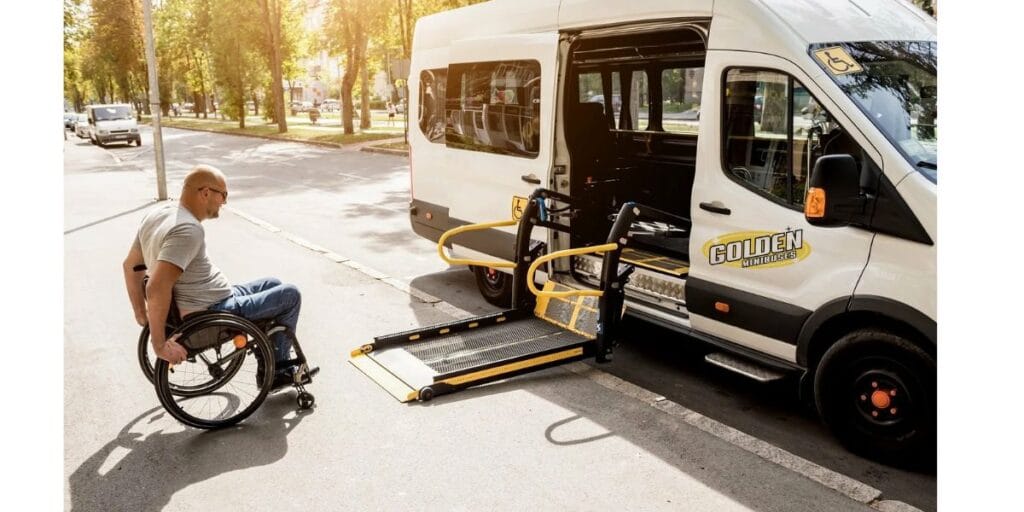
Transport accessibility refers to how easily people can reach, understand, afford, and use transport systems. It includes the full journey, not just the vehicle itself. A system is accessible when a person can get to a stop or station, understand the route, board safely, travel with confidence, and complete the trip without facing avoidable physical, financial, or informational barriers.
In practice, this means accessibility is made up of several linked factors. Physical access matters, but so do affordability, route coverage, service reliability, safety, usability, clear communication, and the availability of support when needed. A bus may technically stop near someone’s home, but if the pavement is broken, the timetable is confusing, the stop has no shelter, and the driver offers no assistance, the system is not truly accessible.
Accessibility is more than wheelchair access
A common mistake is to treat accessibility as if it only means wheelchair accommodation. Step-free boarding is important, but it is only one part of the bigger picture. Good transport accessibility also includes readable signs, adequate seating, safe lighting, audible announcements, predictable schedules, easy ticketing, clear route maps, safe transfers, and staff who know how to help people respectfully.
For many older adults and veterans, the most difficult problem is not always the vehicle itself. It may be the walk to the stop, the stress of a complex interchange, the fear of missing a stop, the pressure of digital ticketing, the absence of a bench, or the unpredictability of a crowded environment. Real accessibility means reducing all of these barriers together.
Why accessibility matters in daily life
Transport is one of the systems that supports everything else. If people cannot travel reliably, they cannot easily reach medical appointments, collect prescriptions, buy groceries, visit family, attend community activities, maintain part-time work, volunteer, or simply remain active in society. When transport breaks down, independence often breaks down with it.
That is why accessibility matters so much. It determines not just whether someone can travel, but whether they can live with confidence, dignity, and meaningful connection to the wider world.
Why Older Populations and Veterans Need Special Attention
Mobility challenges in older populations
Many older adults experience gradual changes that affect how they move through transport environments. Reduced balance, slower walking speed, weaker eyesight, hearing loss, joint pain, fatigue, and chronic illness can all make ordinary journeys feel harder. A staircase that once felt minor may become risky. A short transfer may become exhausting. A crowded platform may feel unsafe rather than routine.
Confidence loss is another major factor. Even when an older person is still physically capable of travel, fear of falling, getting lost, missing a stop, or being unable to ask for help may reduce willingness to use transport. Once this confidence declines, dependence on family members or caregivers often increases.
Mobility and health challenges among veterans
Veterans may face mobility barriers for very different reasons. Some live with physical injuries, chronic pain, limb loss, spinal damage, traumatic brain injury, or service-related disability. Others face invisible but equally serious conditions such as PTSD, anxiety, depression, sensory sensitivity, or cognitive difficulty. These conditions can make public transport confusing, overwhelming, exhausting, or emotionally unsafe.
A veteran may appear physically strong while still struggling with loud crowds, unpredictable spaces, long waits, or rapid schedule changes. Another may need mobility aids but find that stations and vehicles are not designed for practical day-to-day use. Transport difficulty for veterans may therefore stem from both visible and invisible needs.
Shared challenges but different lived realities
Older adults and veterans are often discussed together because both groups may experience reduced independence, isolation, and difficulty using standard transport systems. However, their needs are not identical. Older adults may face barriers associated with ageing, frailty, or fixed income. Veterans may face trauma-linked, disability-linked, or service-related barriers that require a different kind of support.
This is why transport planning must avoid one-size-fits-all assumptions. Good accessibility does not mean treating everyone the same. It means recognising different lived realities and building systems that are flexible enough to support them.
Core Dimensions of Transport Accessibility
Physical accessibility
Physical accessibility is the most visible part of accessible transport. It includes low-floor buses, ramps, lifts, step-free stations, accessible pavements, curb cuts, safe crossings, handrails, level boarding, priority seating, and space for mobility aids. These features matter because travel often fails at the physical level before the actual trip even begins.
For an older adult, a lack of handrails or a high step may make boarding feel dangerous. For a veteran using a cane, prosthetic limb, or wheelchair, poor curb design or narrow boarding space may block the journey entirely. Accessibility must therefore be thought of from pavement to platform to vehicle to destination.
Information accessibility
Transport is only accessible when people can understand it. This means signs must be readable, maps must be simple, announcements must be clear, timetables must be legible, and route information must be available in formats that suit different needs. Audio announcements matter for people with weak vision. Visual displays matter for those with hearing loss. Staff guidance matters when a person is confused or anxious.
Information accessibility also includes digital systems. Websites and apps should be easy to navigate, readable, and consistent. If important service details are hard to find or understand, the transport system becomes inaccessible even before someone leaves home.
Financial accessibility
A transport option that exists but is too expensive is not truly accessible. Many older adults live on fixed incomes and may carefully ration trips based on cost. Veterans may qualify for travel support in some cases, but that support is not always easy to understand or access. Financial accessibility includes concession fares, travel reimbursement, discounted passes, and simple ticket structures that do not punish people for needing flexibility.
Affordability also affects how often people travel. High costs may discourage preventive healthcare visits, social trips, or community participation, even when transport is physically available.
Psychological accessibility
Psychological accessibility is often ignored, but it matters deeply. A journey may be physically possible and still feel unusable if it creates fear, confusion, stress, or overload. Confidence, predictability, crowd safety, fear of getting stranded, fear of falling, trauma triggers, and anxiety about unfamiliar routes can all discourage travel.
For some veterans, a crowded, noisy, and unpredictable station may trigger severe distress. For an older adult, the fear of missing a stop or being unable to sit down may be enough to stop the journey altogether. A truly accessible system must reduce mental strain, not just physical barriers.
Geographic accessibility
Transport also depends on location. Rural communities may have few routes, long distances, and limited service frequency. Suburban areas may have car-dependent design and weak last-mile links. Even urban systems can leave important gaps if stops are far from clinics, housing areas, or community destinations.
Geographic accessibility asks a simple question: can people realistically reach the transport system and use it to go where they need to go? If the answer is no, accessibility is incomplete.
Common Transport Barriers Faced by Older Adults
Difficulty boarding vehicles
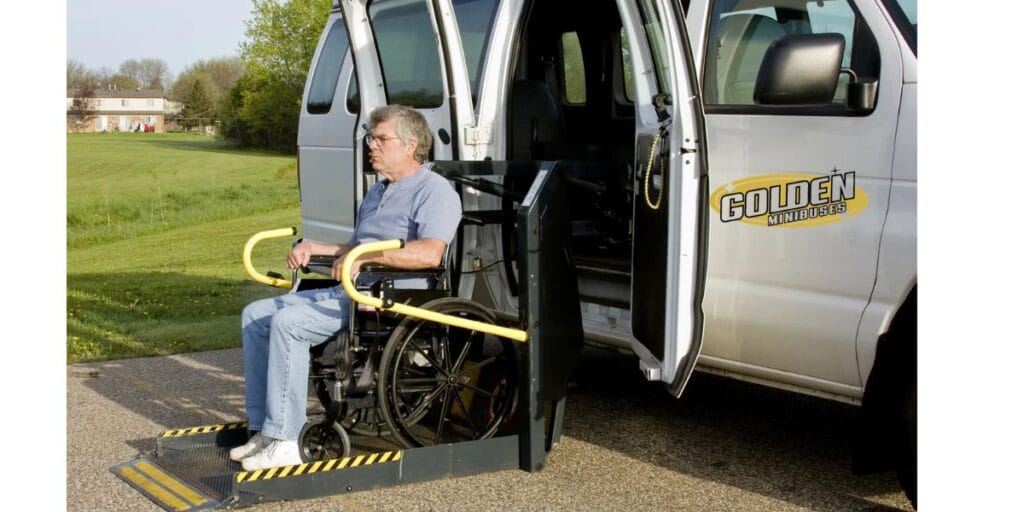
Many older adults struggle with steps, uneven gaps, sudden vehicle movement, or the pressure to board quickly. Even when a bus or train is technically usable, the process may feel unsafe if balance is reduced or joints are painful. This can lead people to avoid transport that once felt routine.
Long walking distances and poor station design
A long walk from home to the stop, a distant platform change, or a station with stairs and poor seating may turn a short journey into a physically draining one. Many transport systems underestimate how much small design flaws add up for older users.
Poor lighting, seating, and shelter
Waiting areas matter. If a stop has no bench, poor lighting, or no shelter from rain, cold, or heat, the journey becomes harder before it begins. For older adults, these conditions are not minor inconveniences. They can be serious barriers.
Complex timetables and ticket systems
Older users may struggle with small print, multi-stage fare systems, app-only booking, or routes that require confusing transfers. A system that is difficult to understand quickly becomes one that people avoid.
Reduced confidence in unfamiliar routes
Many older adults are comfortable with one or two known routes but avoid travelling beyond them. New stations, unfamiliar interchanges, and changing service patterns can feel intimidating. This limits mobility even when transport technically exists.
Fear of falling, crowding, or missing stops
Crowding, sudden movement, and limited seating create constant worry. A person who fears falling or missing a stop may stop travelling alone entirely. This is one of the quiet ways accessibility failure reduces independence.
Common Transport Barriers Faced by Veterans
Physical disability and mobility aid access
Veterans with physical injuries may face obvious barriers when using transport systems not designed for mobility aids, pain conditions, or limited strength. Narrow boarding areas, broken lifts, long transfers, and poor seating can make journeys exhausting or impossible.
Invisible disabilities and unmet support needs
Not every transport need is visible. Veterans dealing with brain injury, PTSD, anxiety, or chronic pain may receive no help because staff or systems assume that only visible disability requires support. This creates a major gap between formal accessibility and lived experience.
PTSD, anxiety, and sensory overload in travel settings
Large crowds, noise, rushed movement, alarms, enclosed spaces, aggressive behaviour, and unpredictable delays can make transport environments deeply uncomfortable for some veterans. A station can become a stress environment rather than a mobility tool.
Pain management and travel fatigue
A journey that looks short on paper may be physically draining in reality. Standing, waiting, repeated transfers, rough surfaces, and delay-related stress can worsen pain and fatigue. This limits usable travel range.
Administrative barriers to support programs
Some veterans may be eligible for assistance, reimbursements, or mobility support, but the systems for accessing these programs can be complicated. Forms, documentation demands, unclear rules, and poor coordination discourage use.
Difficulty using systems not designed for complex needs
Transport systems often assume a standard user. Veterans with mixed needs, such as physical pain plus anxiety plus medication schedules, may find that no single part of the system fits their reality. Complexity itself becomes the barrier.
How Inaccessible Transport Affects Everyday Life
Reduced access to healthcare
Poor transport often leads to missed appointments, delayed treatment, late diagnosis, and greater dependence on others for medical access. This is especially serious for older adults and veterans, who may need regular healthcare more often than the general population.
Social isolation and loneliness
When transport becomes difficult, people often reduce non-essential travel first. Visits to friends, family, community centres, faith spaces, and social events begin to disappear. Over time, a person’s world becomes smaller. This can deepen loneliness and reduce quality of life.
Reduced economic participation
Transport barriers also affect work, volunteering, learning, and daily errands. Someone may stop part-time work not because they are unable to contribute, but because the trip has become too difficult. This weakens both personal independence and community participation.
Mental health and emotional impact
Inaccessible transport produces frustration, fear, dependence, loss of dignity, and withdrawal from public life. People may begin to feel that they are no longer part of ordinary society because ordinary systems are no longer built for them.
Public Transport Accessibility: What Good Systems Look Like
Vehicle design that supports safe boarding
Good systems make boarding calm and safe. Vehicles should allow level or low-step entry, enough time to board, visible handrails, stable floors, and seating that is easy to reach. The goal is not technical compliance alone. It is real-world safety and confidence.
Stations and stops designed for real human needs
Good stops and stations include benches, shelter, lighting, clear paths, safe crossings, toilets where possible, and obvious wayfinding. People should not have to choose between discomfort and travel.
Clear information before and during journeys
Passengers should be able to understand routes, delays, boarding locations, and stop announcements without guesswork. Clear information reduces stress and supports independent travel.
Trained staff who understand disability and ageing
Good systems depend on people as well as infrastructure. Staff should know how to communicate clearly, offer help respectfully, and recognise invisible as well as visible needs. Training should go beyond rules and focus on lived experience.
Consistent reliability and route predictability
Reliability matters because unpredictability creates fear. A journey that is easy one day and chaotic the next is not accessible in a meaningful sense. Older adults and veterans often depend heavily on consistency.
Paratransit, Community Transport, and Demand-Responsive Services
What paratransit and community transport mean
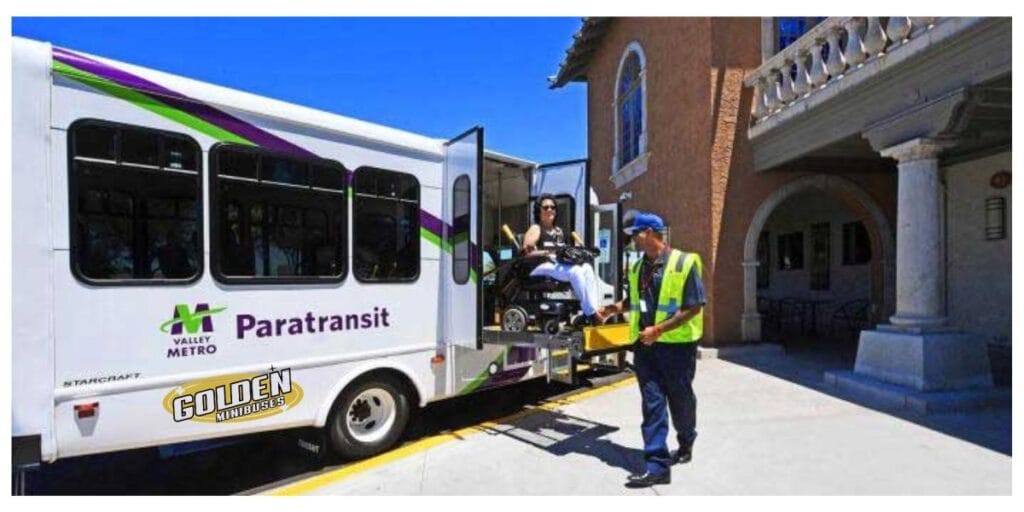
Paratransit and community transport usually refer to flexible or door-to-door services for people who cannot easily use standard public transport. These services may be operated by local government, community groups, healthcare systems, or specialist providers.
Why these services matter
They matter because standard systems do not work for everyone. Door-to-door and demand-responsive services help people reach medical appointments, shops, essential errands, and social destinations that might otherwise be unreachable.
Strengths and limitations
These services can be highly valuable because they reduce walking, simplify boarding, and offer more direct support. But they also have limitations. Booking may be difficult, wait times may be long, availability may be limited, and funding instability may reduce reliability. They are helpful, but often not sufficient on their own.
Rural, Suburban, and Urban Accessibility Differences
Rural transport challenges
Rural users often face the harshest transport barriers. Routes may be rare, stops may be distant, healthcare services may be far away, and alternatives may barely exist. For older adults and veterans without private cars, this can be devastating.
Suburban transport gaps
Suburban areas often look connected but are still difficult to navigate without a car. Bus frequency may be low, walkways may be poor, and essential destinations may be spread out. This creates a different but equally serious accessibility problem.
Urban systems are not automatically accessible
Cities usually offer more transport, but more is not the same as better. Crowding, long interchanges, noise, confusion, and fast-moving spaces can make urban systems inaccessible in practice, especially for users with anxiety, sensory sensitivity, or low confidence.
Digitalisation and the Accessibility Gap
App-based booking and information systems
Apps can improve convenience for many users, but they can also exclude those with limited digital confidence, poor vision, older devices, or inconsistent internet access. A service that works only through an app is not fully accessible.
E-ticketing and cashless transport
Digital payments and e-ticketing can simplify travel, but they can also create barriers for people who prefer cash, struggle with smartphones, or worry about making payment errors. Accessibility requires choice, not forced digital dependence.
Why accessible digital design matters
Good digital design should include large text, simple menus, readable contrast, voice support, clear instructions, and support channels that are easy to reach. Just as important, non-digital options must remain available.
Financial Support, Concessions, and Mobility Assistance Programs
Discounted fares and concession travel
Concession travel can reduce cost pressure and encourage more frequent travel for older adults living on fixed incomes. This is one of the most direct ways to improve practical accessibility.
Veteran travel assistance or reimbursement schemes
In some settings, veterans may receive travel assistance for healthcare or service-related needs. These supports can make a major difference, especially where specialist care is located far from home.
Mobility grants, local support, and nonprofit programs
Local grants, community transport funds, nonprofit services, and volunteer support schemes often fill important gaps. These programs matter especially where public systems are weak.
Gaps in awareness and access
Many people do not know what support exists or how to qualify. Poor communication turns formal support into practical non-support.
Why support programs still fail without simple design
Even good support programs fail when forms are complicated, rules are unclear, or access depends on digital fluency. Simplicity is part of accessibility.
The Role of Infrastructure in Accessible Mobility
Pavements, crossings, and curb design
Accessibility begins before the stop. Broken pavements, fast crossings, missing curb cuts, and uneven surfaces can make the entire system unusable.
Benches, shelters, and waiting areas
A well-placed bench may be the difference between a usable and unusable journey. Shelter, shade, and protection from weather also matter more than many planners assume.
Safe drop-off and pick-up points
Older adults and veterans often depend on assisted drop-off, medical transport, or family support. Safe and well-designed pick-up points are essential.
Lighting, toilets, and rest opportunities
Good lighting improves safety and confidence. Toilets and rest areas matter for people managing medication, fatigue, bladder urgency, or long waits.
Wayfinding and environmental clarity
Clear paths, readable signs, simple layouts, and intuitive design reduce confusion and make travel feel safer.
The Human Side of Accessibility: Training, Respect, and Dignity
Why staff behaviour matters
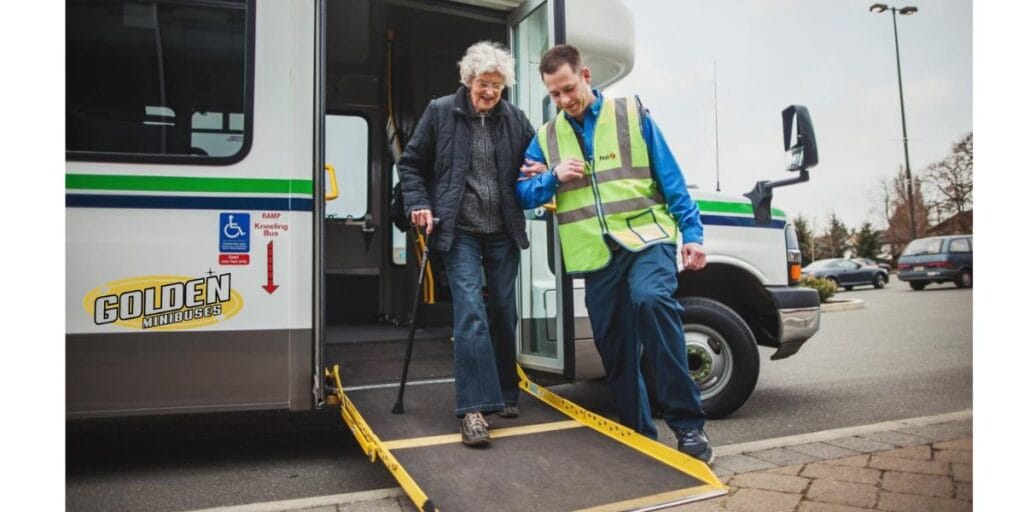
Respectful help can make travel possible. A patient driver, a calm station worker, or a staff member who understands confusion or pain can transform the entire journey. On the other hand, poor treatment may discourage someone from travelling again.
Understanding invisible needs
Not all accessibility needs can be seen. A passenger may not use a mobility aid and still need quiet, clarity, time, or support. Staff awareness matters enormously here.
Independence should not mean abandonment
Accessible systems should help people travel independently without forcing them to manage everything alone. Good accessibility protects dignity while still offering human help when needed.
Policy, Planning, and Institutional Responsibility
Accessibility should be built into transport planning
Accessibility cannot be an afterthought or optional feature. It must be included from the earliest planning stage in vehicles, routes, stations, ticketing, and service design.
Why consultation with users matters
Older adults and veterans understand barriers that planners may overlook. Consultation should be real, regular, and tied to decision-making, not symbolic.
Transport equity and social inclusion goals
Accessible transport is part of social inclusion. Without it, healthcare, civic participation, and public life become unequal.
Coordination between transport, health, and veterans’ services
Transport planning should connect with health systems, community services, and veterans’ support structures. Many mobility needs are not separate from healthcare or social support.
Funding and accountability challenges
Accessibility often fails because it is underfunded, weakly enforced, or treated as secondary. Without accountability, good intentions do not produce usable systems.
Practical Strategies to Improve Accessibility for Older Adults and Veterans
Universal design in vehicles and stations
Design should work for the widest range of users from the start. Universal design reduces the need for special fixes later.
Better route planning around health and community destinations
Routes should connect people to clinics, pharmacies, veterans’ services, shopping areas, and community centres, not just major city corridors.
Simpler fare systems and booking methods
Complex fares punish vulnerable users. Simpler systems make transport easier to understand and trust.
More flexible and local transport options
Not every need can be met through standard bus and rail systems. Flexible local options help fill real gaps.
Better communication, signage, and real-time updates
Passengers need reliable, easy-to-read information. Confusion is one of the biggest practical barriers in transport.
Co-design with older adults and veterans
The strongest solutions come from designing with users, not just for them. This is a major opportunity and a major truth-first point.
How Families, Caregivers, and Communities Can Help
Helping without creating dependence
Support should increase confidence, not replace it where independence is possible. The goal is not control. It is usable support.
Travel training and confidence-building
Practice trips, route rehearsals, and calm guidance can help people rebuild travel confidence after a long break or major life change.
Community volunteering and escort services
Volunteer escorts and local support services can help bridge the gap between formal systems and lived need.
Local advocacy for better access
Communities can push for benches, safer crossings, better stops, and more usable routes. Small local wins matter.
Supporting trip planning for health and daily needs
Families and caregivers can help by simplifying schedules, checking routes, printing backup information, and reducing uncertainty.
The Future of Accessible Transport for Older Populations and Veterans
Ageing populations will increase pressure on systems
As populations age, more people will depend on accessible transport. This is not a niche issue. It is a growing mainstream requirement.
Smarter transport must still remain human-centred
Technology may improve transport, but only if it remains understandable, supportive, and usable for real people.
Better data and user feedback may improve service design
More direct feedback and better mobility data can help systems respond to actual barriers instead of assumptions.
More integrated mobility services may emerge
Future mobility may combine public transport, community services, medical transport, and on-demand options more effectively.
Accessibility will increasingly be treated as a basic service standard
The strongest long-term direction is clear: accessibility should be seen as a basic standard of good transport, not a special add-on.
Frequently Asked Questions
What does transport accessibility mean for older adults?
It means being able to reach and use transport safely, affordably, confidently, and independently. That includes walking access, easy boarding, clear information, affordable fares, and reliable support.
Why do veterans face transport accessibility challenges?
Veterans may face physical injuries, chronic pain, PTSD, sensory overload, brain injury, anxiety, or administrative barriers that make transport difficult. Some of these challenges are visible, while others are not.
What are the biggest transport barriers for older populations?
Common barriers include stairs, long walks, lack of seating, poor lighting, confusing timetables, ticketing complexity, fear of falling, crowd stress, and low confidence in unfamiliar routes.
How does inaccessible transport affect healthcare access?
It can lead to missed appointments, delayed treatment, medication problems, and greater dependence on others for care access. Over time, this can worsen health outcomes.
What transport services help veterans with disabilities?
Helpful services may include accessible public transport, paratransit, veterans’ travel assistance programs, community transport, medical transport services, and demand-responsive local options.
How can public transport be made more accessible?
It can be improved through step-free design, clear signage, audio and visual information, affordable fares, trained staff, better route planning, benches, shelters, reliable service, and simpler ticketing.
Are digital ticket systems a barrier for older users?
They can be. While some people find them convenient, others struggle with app-only booking, small text, digital payments, and lack of non-digital alternatives. Accessibility requires both good digital design and offline options.
Why is transport accessibility important for social inclusion?
Because mobility makes participation possible. Without accessible transport, people may lose access to healthcare, work, social life, family contact, community spaces, and public independence.
Conclusion
Transport accessibility is essential for independence, dignity, and inclusion. For older adults and veterans, it shapes whether daily life remains connected or becomes restricted. These groups face some shared barriers, such as affordability, poor design, and low confidence, but they also face different realities that require more thoughtful planning and more flexible support.
Good accessibility is not achieved through one feature alone. It depends on better design, clearer information, affordability, staff awareness, safe infrastructure, and coordination between transport, health, and support systems. The best transport systems are not only technically accessible. They are understandable, predictable, respectful, and genuinely usable in real life.